
SCOPES Health
HomeOur DoctorsConditionsTreatmentsLocations
Book Your Visit
Call Now
Dorsal Root Ganglion (DRG) Stimulation

Neuromodulation

Dorsal Root Ganglion (DRG) Stimulation

Targeted electrical stimulation that interrupts pain signals at their source, effective for localized nerve pain that does not respond to conventional treatment.

Neuromodulation

Category

Outpatient

Procedure

Non-Opioid

Approach

Image-Guided

Precision

Book Your VisitBack to Treatments

Treatment Guide

Use this guide to understand procedural goals, appropriate indications, and what to expect before, during, and after treatment.

Procedure OverviewClinical DataTreatment PurposeAppropriate ConditionsPatient ConsiderationsTreatment ProcessFrequently Asked Questions

Procedure Overview

You may have tried spinal injections, medications, or other procedures, and the pain in your foot, knee, groin, or pelvis is still there. It is localized. It does not move. It does not respond. If that is your experience, the issue may be in the dorsal root ganglion, the specific cluster of nerve cells responsible for relaying pain from that exact region.

Clinical Data

Published clinical studies report that 74 to 86% of patients achieve 50% or greater pain reduction following DRG stimulation, and 80 to 86% report improved quality of life. (Source to be confirmed by SCOPES Health clinical team.)

Treatment Purpose

DRG stimulation places a small electrode near the dorsal root ganglion along the spine. It delivers precisely targeted electrical impulses that modulate pain at its source, making it especially effective for localized chronic pain in areas that are difficult to treat with traditional spinal cord stimulation.

Appropriate Conditions

  • Complex Regional Pain Syndrome (CRPS)
  • Neuropathic pain in the limbs, groin, or pelvis
  • Post-surgical nerve pain
  • Phantom limb pain

Patient Considerations

That concern is valid and our physicians hear it often. Before anything permanent is decided, you go through a 5 to 7 day trial with temporary leads. The trial is reversible. If it does not deliver at least 50% pain reduction, the permanent procedure does not happen. You are not committed to anything until the results speak for themselves.

Treatment Process

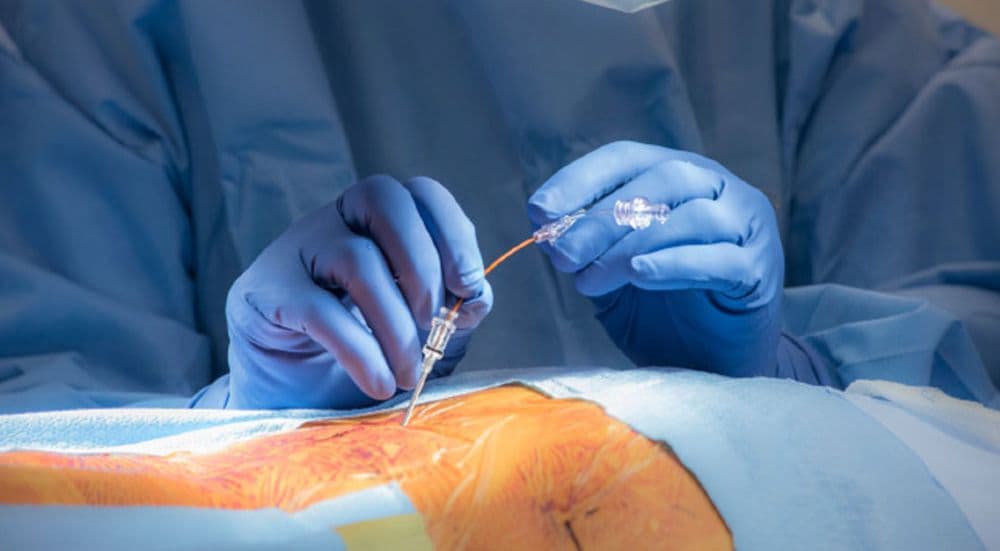
The process begins with the trial phase: temporary leads are placed under fluoroscopic guidance in a short outpatient procedure. You go home the same day and track your pain over 5 to 7 days. If the trial is successful, the permanent implant procedure takes approximately 1 to 2 hours and is also performed on an outpatient basis. No hospital stay is required.

Frequently Asked Questions

Is the stimulation uncomfortable?

Most patients feel only mild tingling. Newer paresthesia-free systems eliminate even that sensation.

What are the risks?

Risks include infection, lead migration, and device malfunction. Serious neurological complications are uncommon.

Is it reversible?

Yes. The device can be adjusted, reprogrammed, or removed at any time.

Need Guidance?

Talk With a SCOPES Specialist

Every care plan is based on your diagnosis, your symptoms, and your goals.

Book Your Visit
Back to all treatments
SCOPES Health

Precision-driven pain management rooted in science, guided by compassion.

Clinics

Bakersfield: 3850 Riverlakes Drive, Suite B, Bakersfield, CA 93312
Sherman Oaks: 15165 Ventura Blvd, Suite 120, Sherman Oaks, CA 91403

Surgery Centers

Bakersfield: 6501 Truxtun Ave, Bakersfield, CA 93309
Los Angeles: 2080 Century Park E, Suite 1210, Los Angeles, CA 90067
Book Your Visit

Navigate

  • Home
  • Conditions
  • Our Doctors
  • Treatments
  • Locations

Services

  • Back & Spine Pain
  • Nerve Blocks
  • Joint Injections
  • Rehabilitation

Office Hours

  • Monday - Friday: 8:00 AM - 5:00 PM

© 2026 SCOPES Health. All rights reserved.

Privacy PolicyTermsAccessibility
SCOPES Health