
SCOPES Health
HomeOur DoctorsConditionsTreatmentsLocations
Book Your Visit
Call Now
Subacromial / Subdeltoid Bursa Injections

Nerve Blocks & Injections

Subacromial / Subdeltoid Bursa Injections

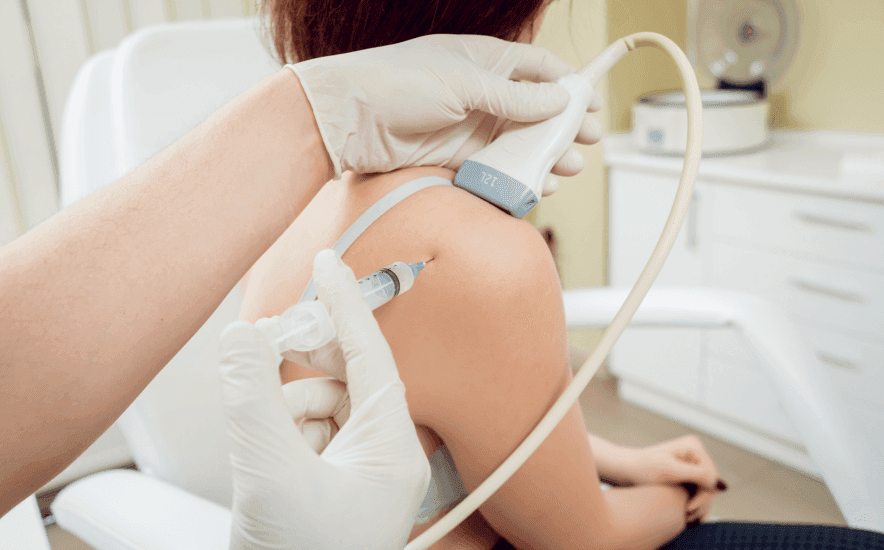
Anti-inflammatory injection into the subacromial space, relieving shoulder bursitis and rotator cuff impingement to restore comfortable arm movement.

Nerve

Category

Outpatient

Procedure

Non-Opioid

Approach

Image-Guided

Precision

Book Your VisitBack to Treatments

Treatment Guide

Use this guide to understand procedural goals, appropriate indications, and what to expect before, during, and after treatment.

Procedure OverviewClinical DataTreatment PurposeAppropriate ConditionsPatient ConsiderationsTreatment ProcessFrequently Asked Questions

Procedure Overview

Shoulder pain that is triggered by arm movement, especially overhead or across the body, is frequently caused by inflammation in the subacromial bursa, a small fluid-filled sac that cushions the space between the rotator cuff and the acromion bone. When it becomes inflamed, every arm movement becomes a source of pain. That inflammation can be treated directly.

Clinical Data

Published data reports 70 to 80% of patients experience significant short-term pain relief following subacromial bursa injections, with ultrasound-guided injections significantly more accurate and effective than landmark-based injections, and relief typically lasting 4 to 8 weeks per injection. (Source to be confirmed by SCOPES Health clinical team.)

Treatment Purpose

These injections deliver corticosteroid and local anesthetic directly into the subacromial space beneath the shoulder's acromion. By reducing bursal inflammation, the injection relieves pain and restores comfortable range of motion, allowing patients to engage more effectively in physical therapy and rehabilitation.

Appropriate Conditions

  • Subacromial bursitis
  • Subdeltoid bursitis
  • Rotator cuff impingement syndrome
  • Rotator cuff tendinosis
  • Frozen shoulder
  • Shoulder pain from overuse or repetitive strain

Patient Considerations

For many patients, yes. Subacromial injections can reduce inflammation enough to allow physical therapy to progress, which in turn addresses the underlying mechanical issues contributing to impingement. Surgery becomes necessary far less often when the inflammatory component of shoulder pain is addressed early and directly.

Treatment Process

The procedure takes 10 to 20 minutes under ultrasound guidance. A thin needle is placed beneath the acromion into the subacromial-subdeltoid bursa and corticosteroid is injected. You return home the same day and are advised to avoid heavy shoulder loading for 2 to 3 days. Physical therapy can generally begin 1 to 2 days after the injection.

Frequently Asked Questions

How many injections can I receive?

Typically no more than 3 to 4 corticosteroid injections per year in the same joint to minimize risks to surrounding tissue.

When can I start physical therapy?

Physical therapy can generally begin 1 to 2 days after the injection once initial soreness subsides.

What are the risks?

Very low risk. Rare complications include infection, tendon weakening with repeated injections, or a temporary pain flare.

Need Guidance?

Talk With a SCOPES Specialist

Every care plan is based on your diagnosis, your symptoms, and your goals.

Book Your Visit
Back to all treatments
SCOPES Health

Precision-driven pain management rooted in science, guided by compassion.

Clinics

Bakersfield: 3850 Riverlakes Drive, Suite B, Bakersfield, CA 93312
Sherman Oaks: 15165 Ventura Blvd, Suite 120, Sherman Oaks, CA 91403

Surgery Centers

Bakersfield: 6501 Truxtun Ave, Bakersfield, CA 93309
Los Angeles: 2080 Century Park E, Suite 1210, Los Angeles, CA 90067
Book Your Visit

Navigate

  • Home
  • Conditions
  • Our Doctors
  • Treatments
  • Locations

Services

  • Back & Spine Pain
  • Nerve Blocks
  • Joint Injections
  • Rehabilitation

Office Hours

  • Monday - Friday: 8:00 AM - 5:00 PM

© 2026 SCOPES Health. All rights reserved.

Privacy PolicyTermsAccessibility
SCOPES Health